Growth
Capstone Project 2025
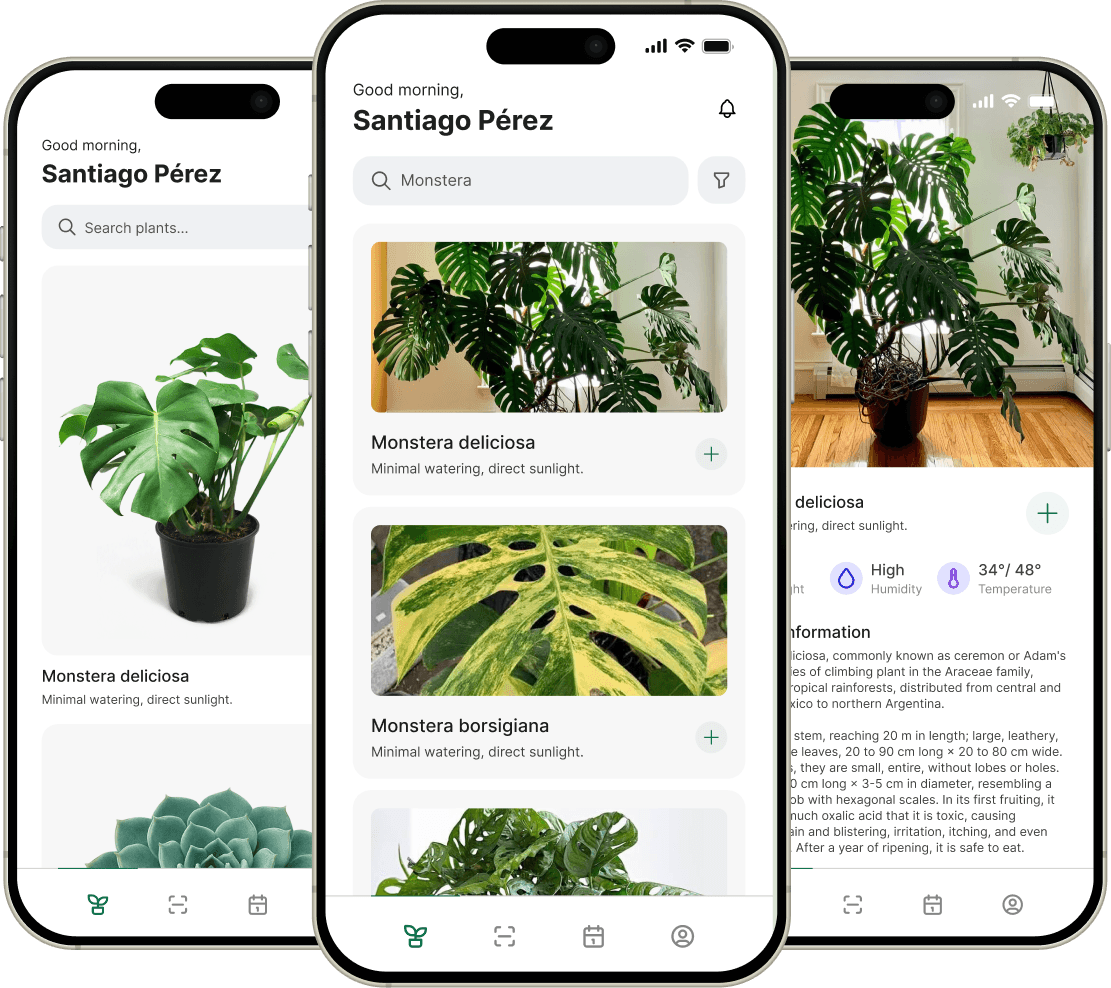
PROCESS HIGHLIGHTS
Capstone overview
Challenge
Create a smart ecosystem for plant care that combines hardware with web and mobile apps.
Opportunity
Develop an innovative smart gardening platform that converts the manual, time-consuming process of plant care into an automated, data-driven experience.
Timeline
August 2025
Disciplines
User Experience Design
User Interface Design
Responsibilities
UX Research
Design Thinking
Wireframing
Prototyping
Tools
Figma
Figjam
Arduino
VSC
BACKGROUND
Keep plants alive to keep us healthy
Caring for a living organism is not easy without the necessary time, knowledge, and consistency, even less so if you are a busy person. Removing the barriers of time and knowledge, enabling eco-conscious consumers to maintain thriving home gardens improving air quality, reduces carbon footprints, and even your mood and health.
The Process
1
Research
User Interviews
Competitor Analysis
2
Synthesis
Persona
User Journey
3
Ideation
Developing a Solution
User Flow
Low Fidelity
Mid Fidelity
4
Final Designs
Final Prototype
Major Redesigns
5
Reflection
Next Steps
Conclusion
RESEARCH
Competitor Analysis
The market for gardening and plant care apps is growing 35% annually and is now worth over $47 million, driven by millennials and Gen Z seeking sustainability, health, and well-being. Indoor gardening improves air quality, reduces carbon footprint and plastic waste, and offers an alternative to unpredictable weather. Smart solutions eliminate barriers of time and knowledge, combining profitability with positive environmental and social impact.




RESEARCH
User persona
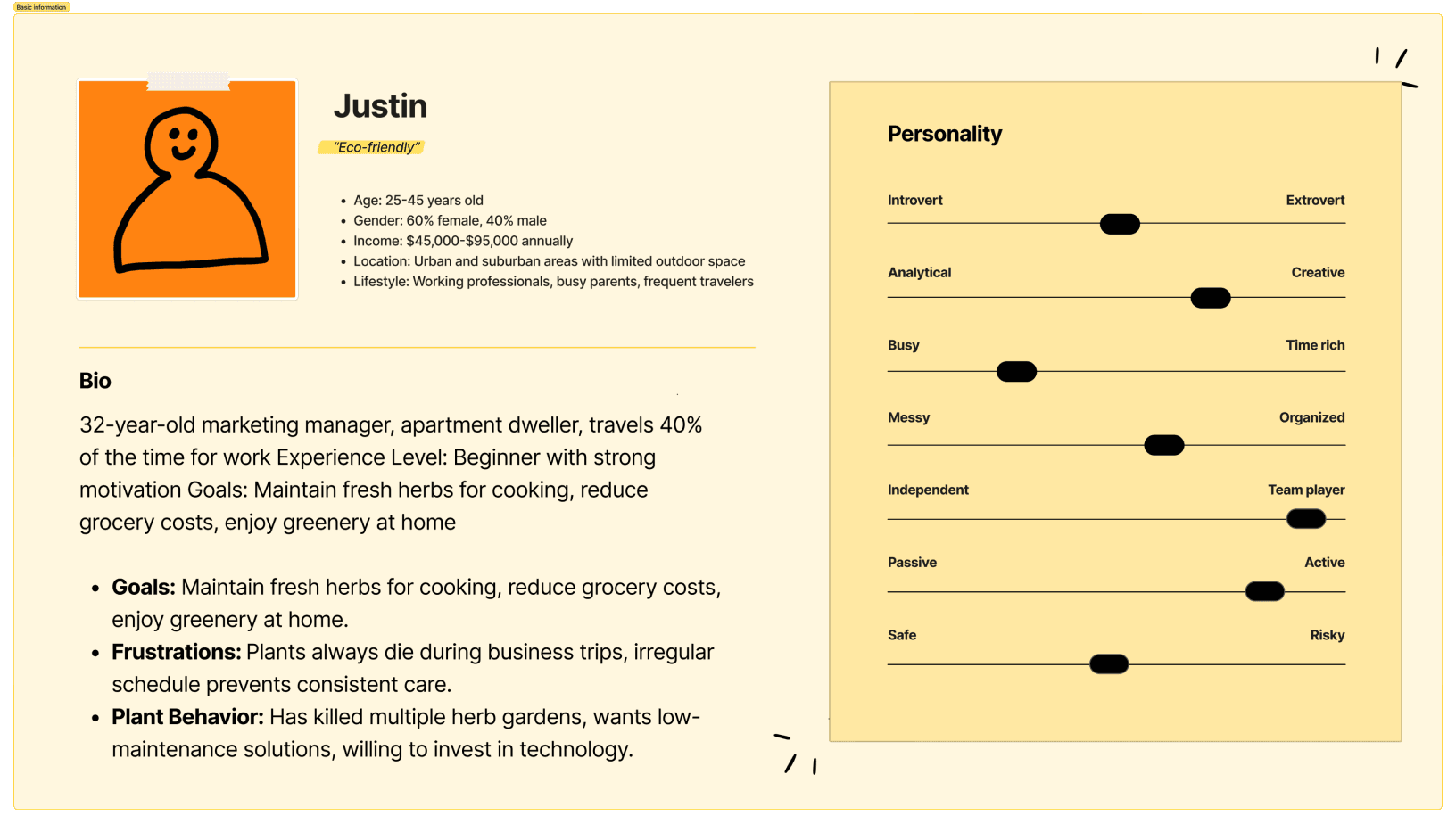
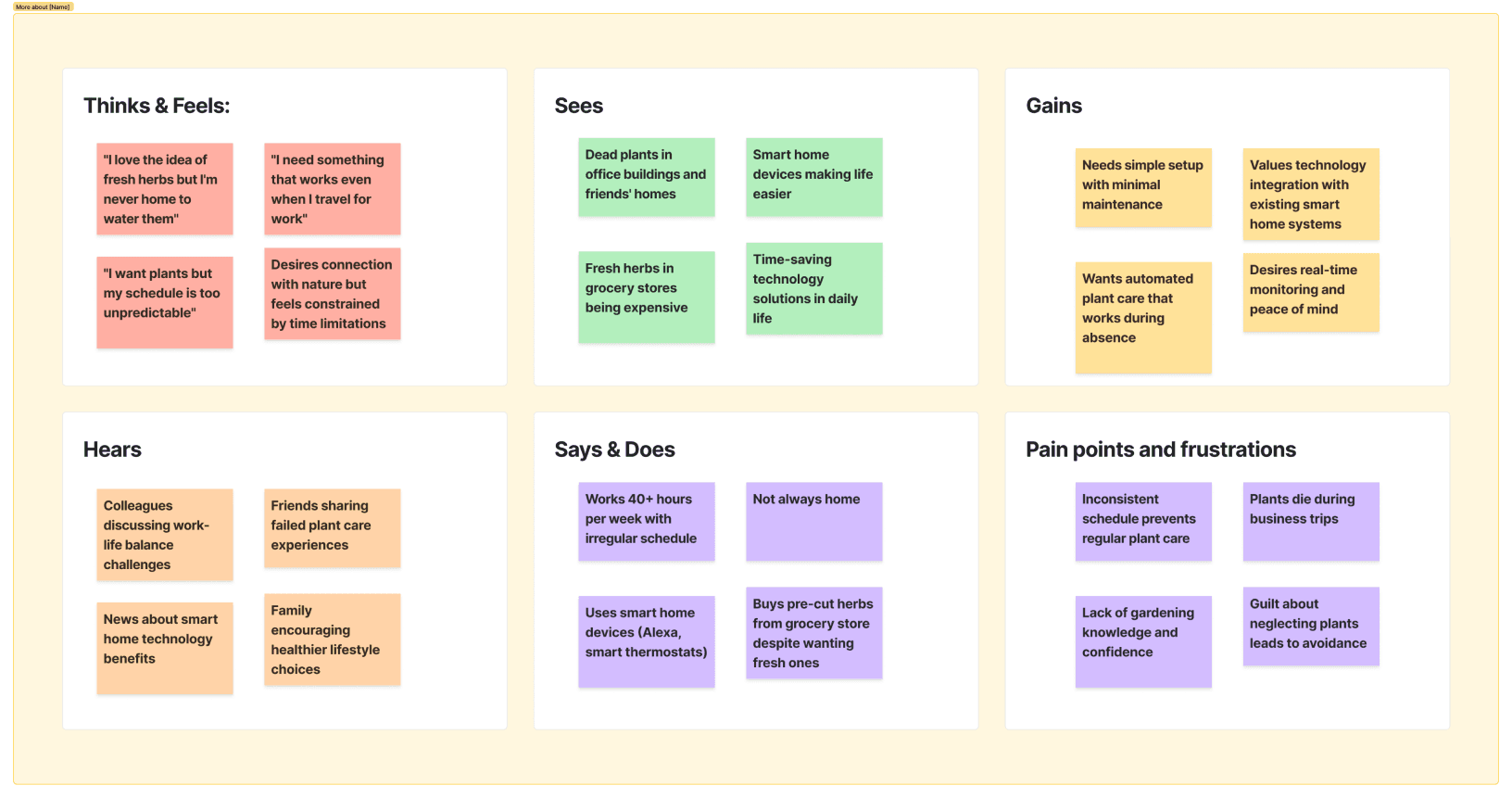
User Pain Points:
Plant enthusiasts face a significant lack of market education about the real costs and complexity of proper plant care.
Many users underestimate the time, attention, and environmental control required to maintain healthy plants.
RESEARCH
User Interviews
In order to learn more about plant enthusiasts' experiences and understand their needs and pain points, I interviewed six individuals who have attempted to maintain plants or gardens while managing busy professional schedules. The participants included working professionals, frequent travellers, and urban dwellers who have struggled with traditional plant care methods.
Questions revolved around:
•
How do you currently manage the care and monitoring of your plants?
•
What are the main challenges you face when trying to keep plants alive?
•
How would you feel about using automated technology to help care for your plants?
RESEARCH
Insights
1
The Time Investment vs. Convenience Expectation Gap
There is a clear undervaluation of time, consistency, and precision required for plant health
2
The Smart Home Integration Gap
Plant care as missing piece in smart home ecosystem.
3
The Plant Mortality Shame Cycle
Shows how plant death creates avoidance rather than learning, a psychological barrier preventing user retention.
Plant enthusiasts aren't just growing plants—they're nurturing well-being, building sustainable lifestyles, and creating connections with nature. Yet current platforms fail to provide the technological infrastructure needed to support these deeper values. Understanding this gap between meaningful plant care aspirations and practical implementation barriers was key to defining what needed to change.
IDEATION
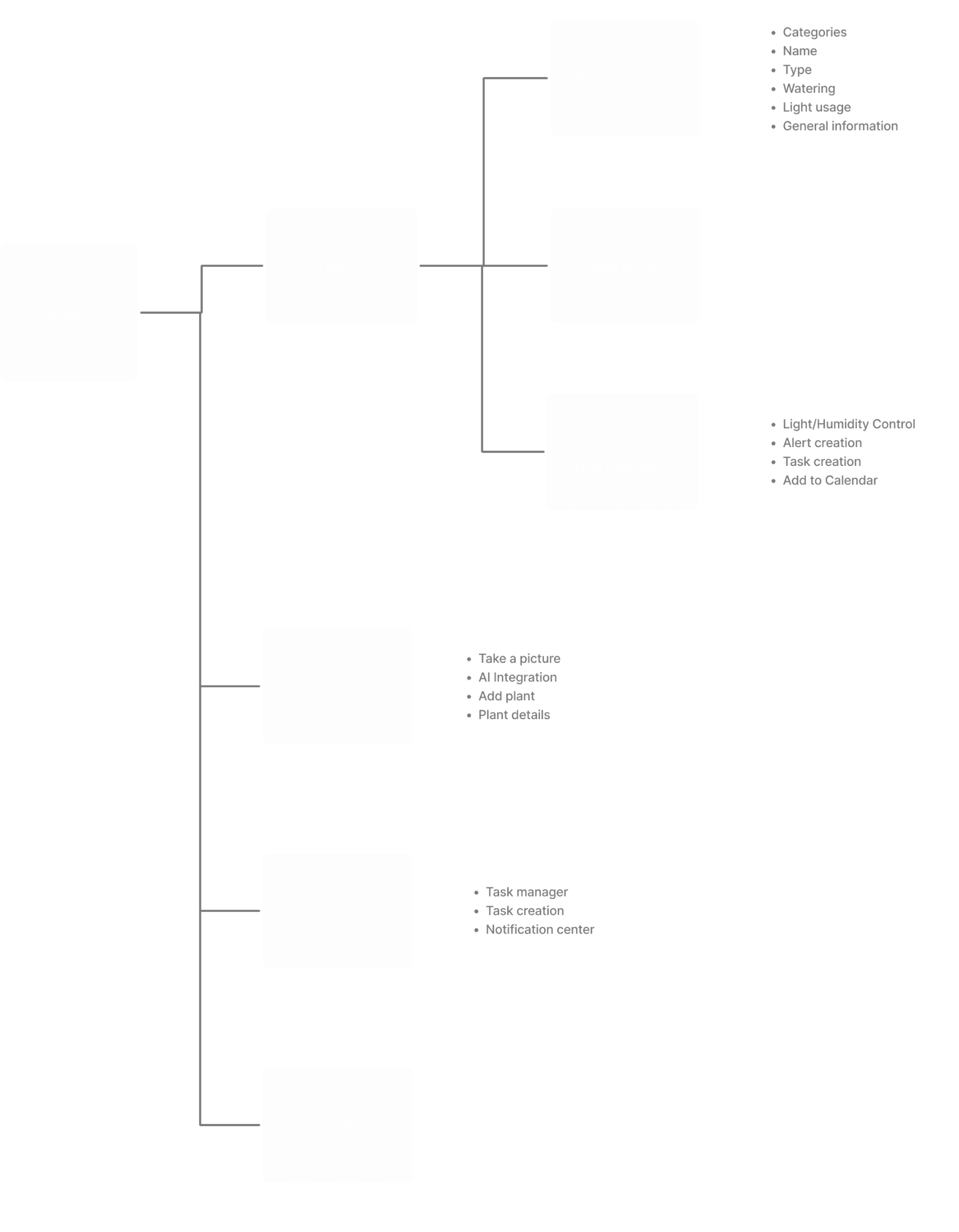
Information Architecture
This information architecture outlines an integrated ecosystem designed to help users discover optimal plant care solutions and manage their plant collections through smart automation.
IDEATION
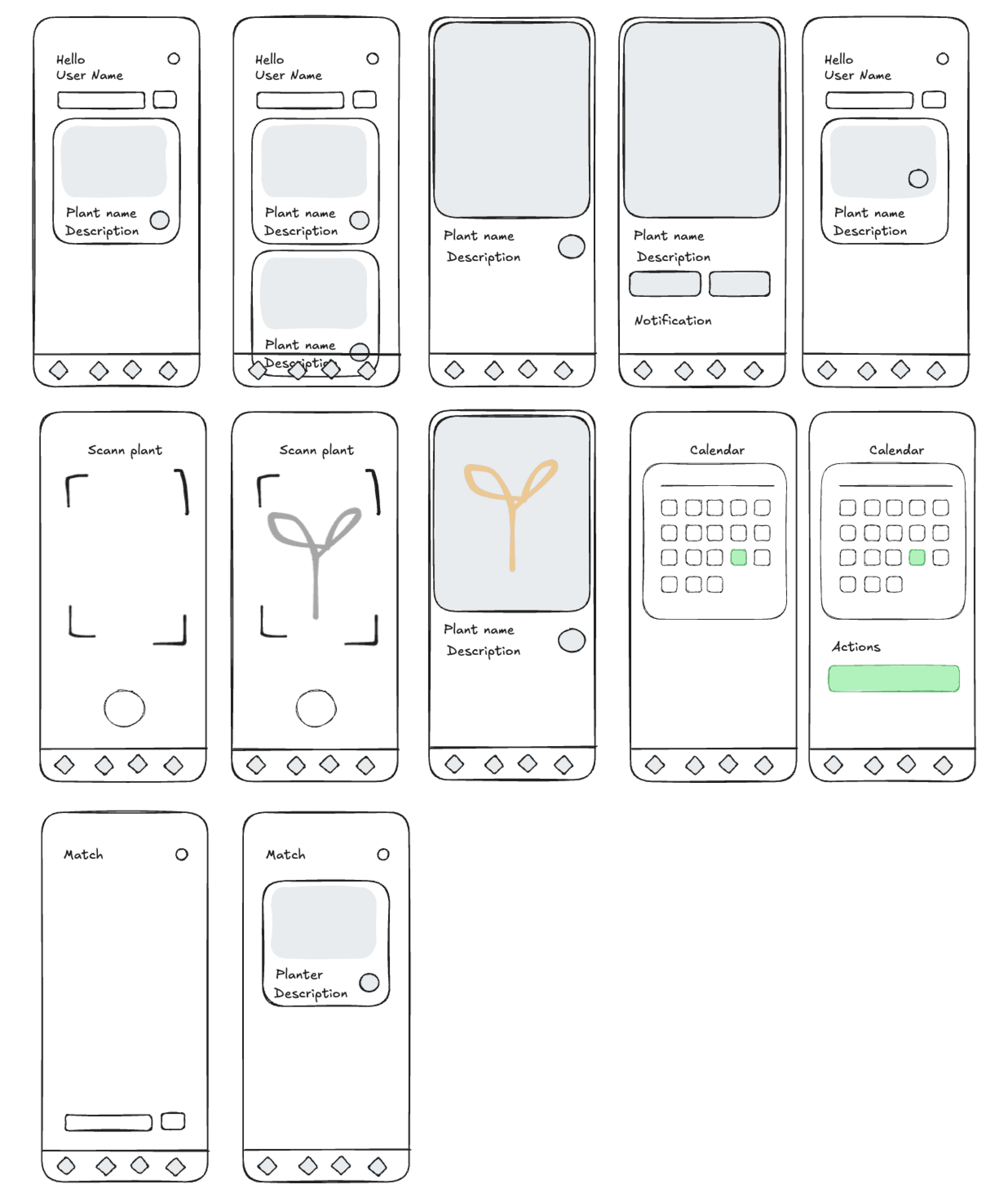
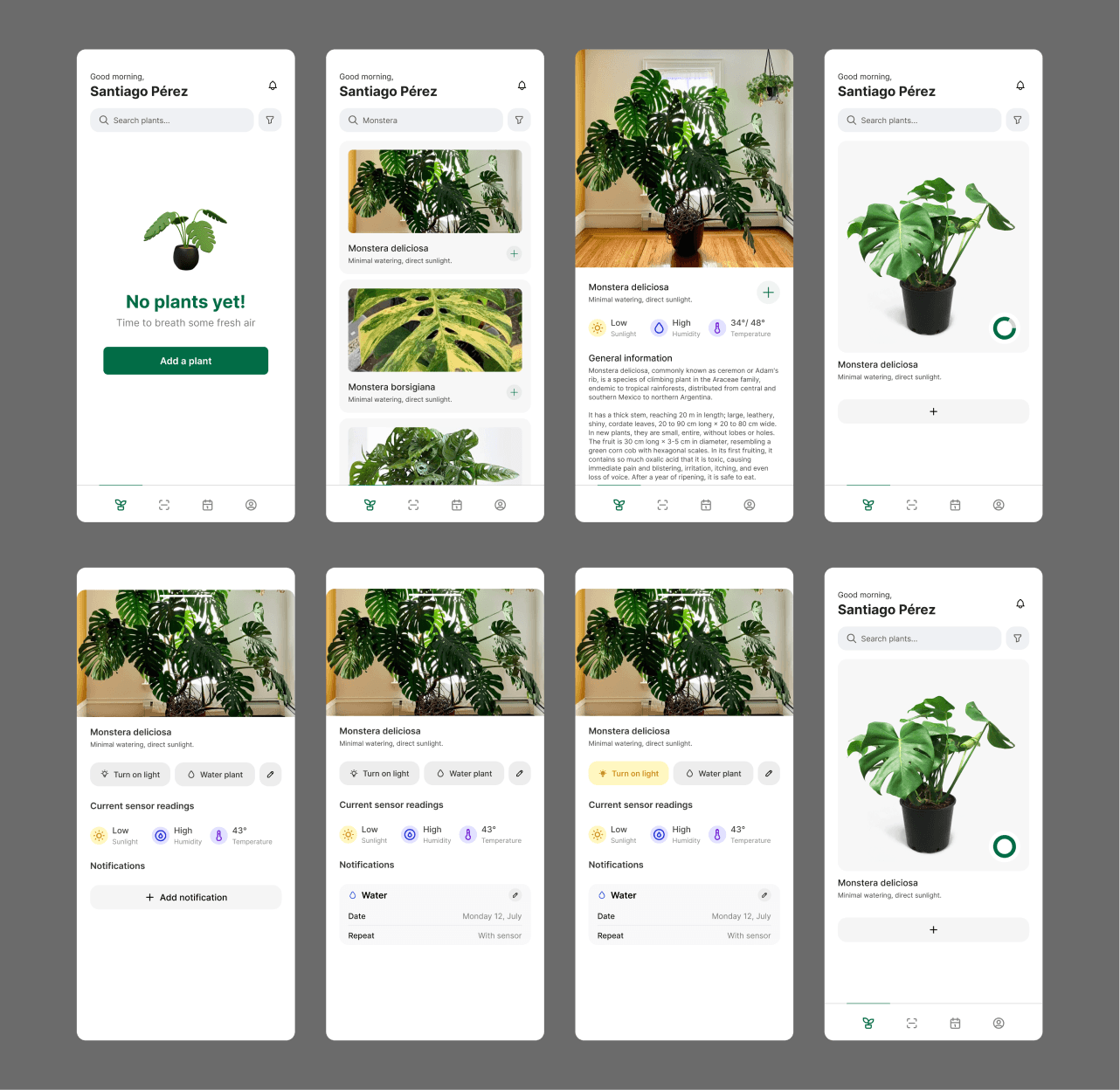
Wireframes
IDEATION
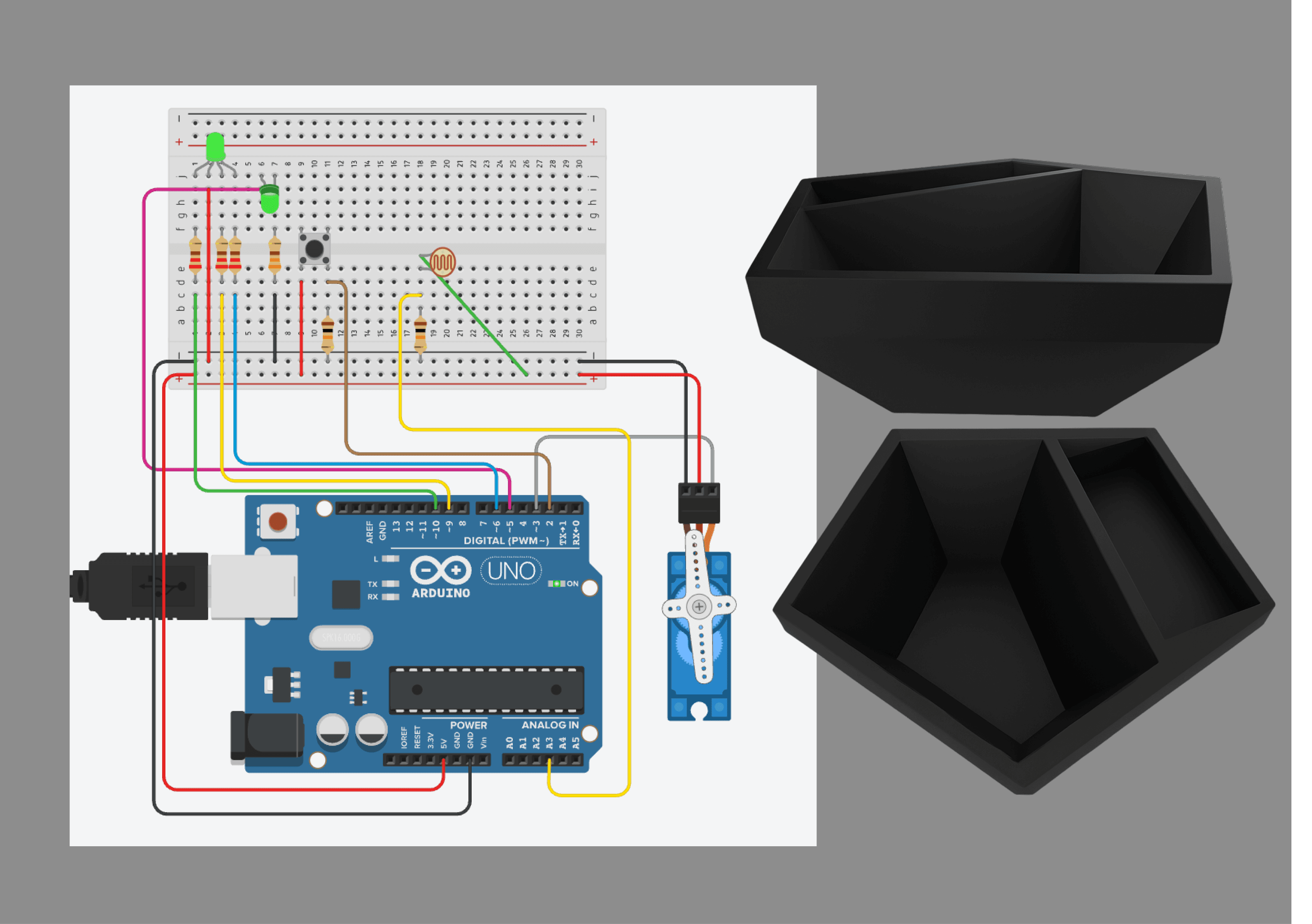
The circuit and 3D model
IDEATION
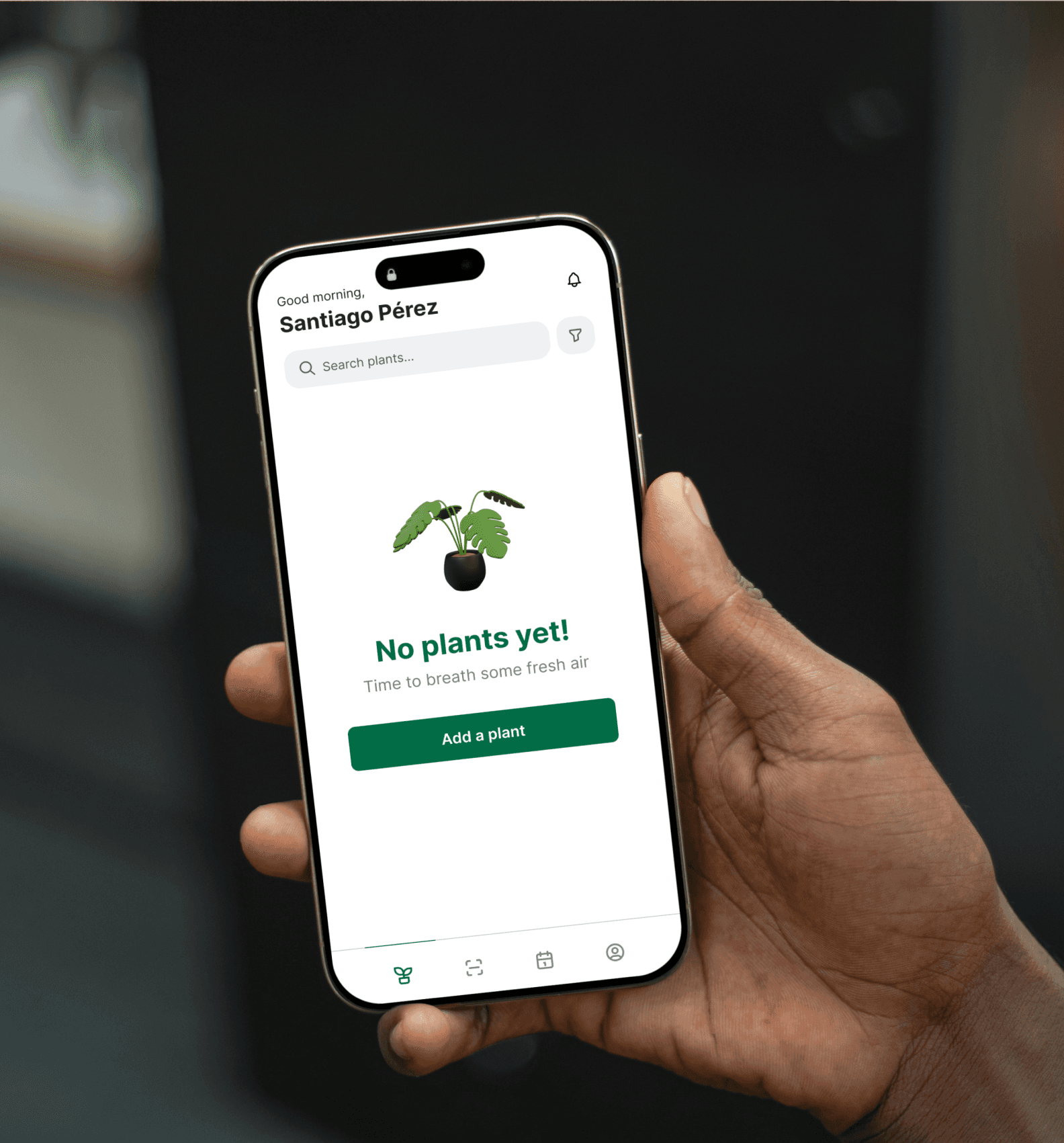
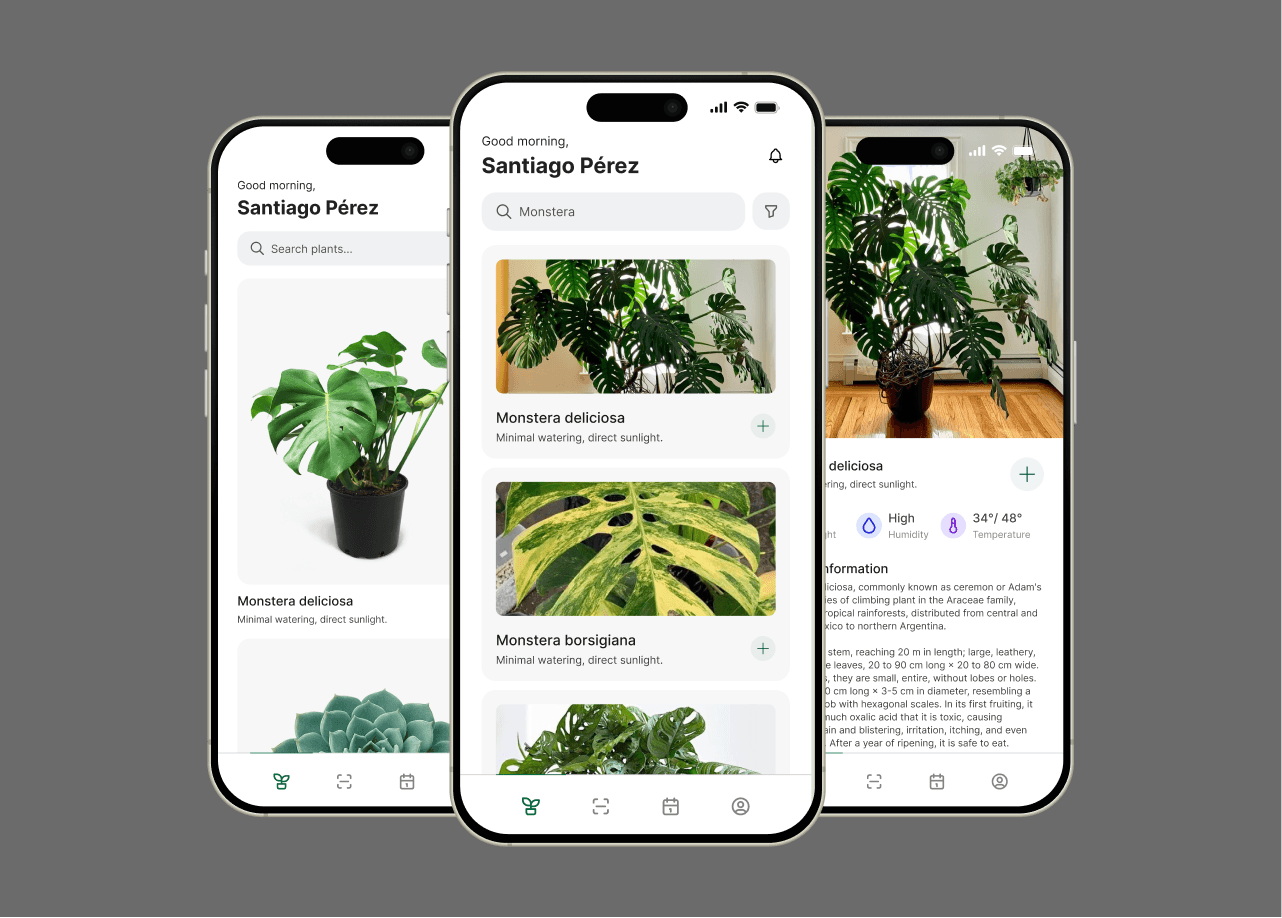
First Design

01
High Fidelity First Iteration
RESEARCH 2
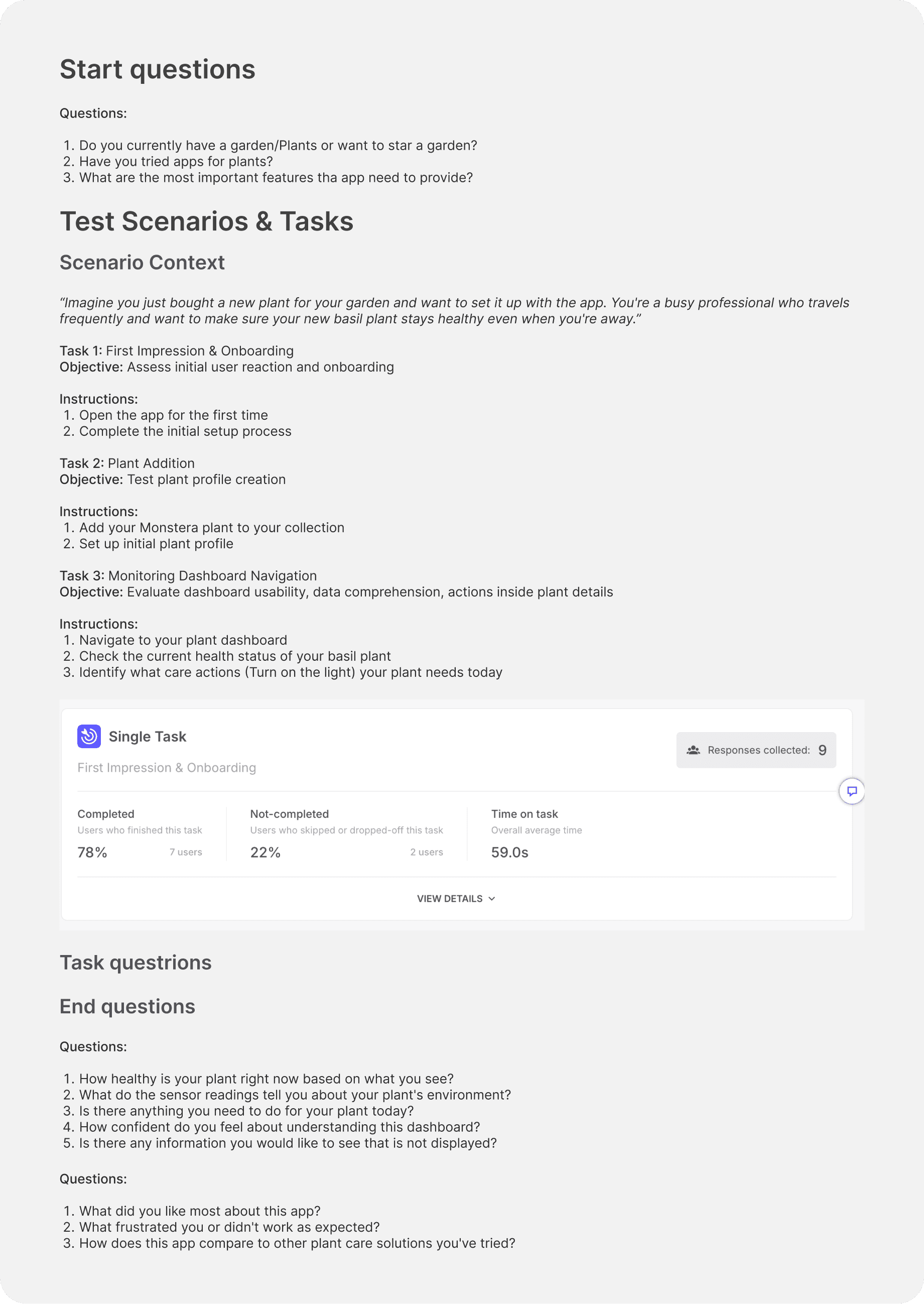
Primary Goals
∙ Validate that users can successfully add and monitor plants using smart planter integration
∙ Evaluate the clarity and usefulness of real-time data visualization.
∙ Evaluate the effectiveness of the automated alert, notification, calendar system.
∙ Determine whether users are confident that their plants will thrive with the automated system.
RESEARCH 2
Keep Fix and Change
Keep
∙ Good visual design - Everyone loved the aesthetics
∙ Clear sensor readings - Easy-to-understand icons and data
∙ High-quality plant photographs
∙ Good plant data base
FIX
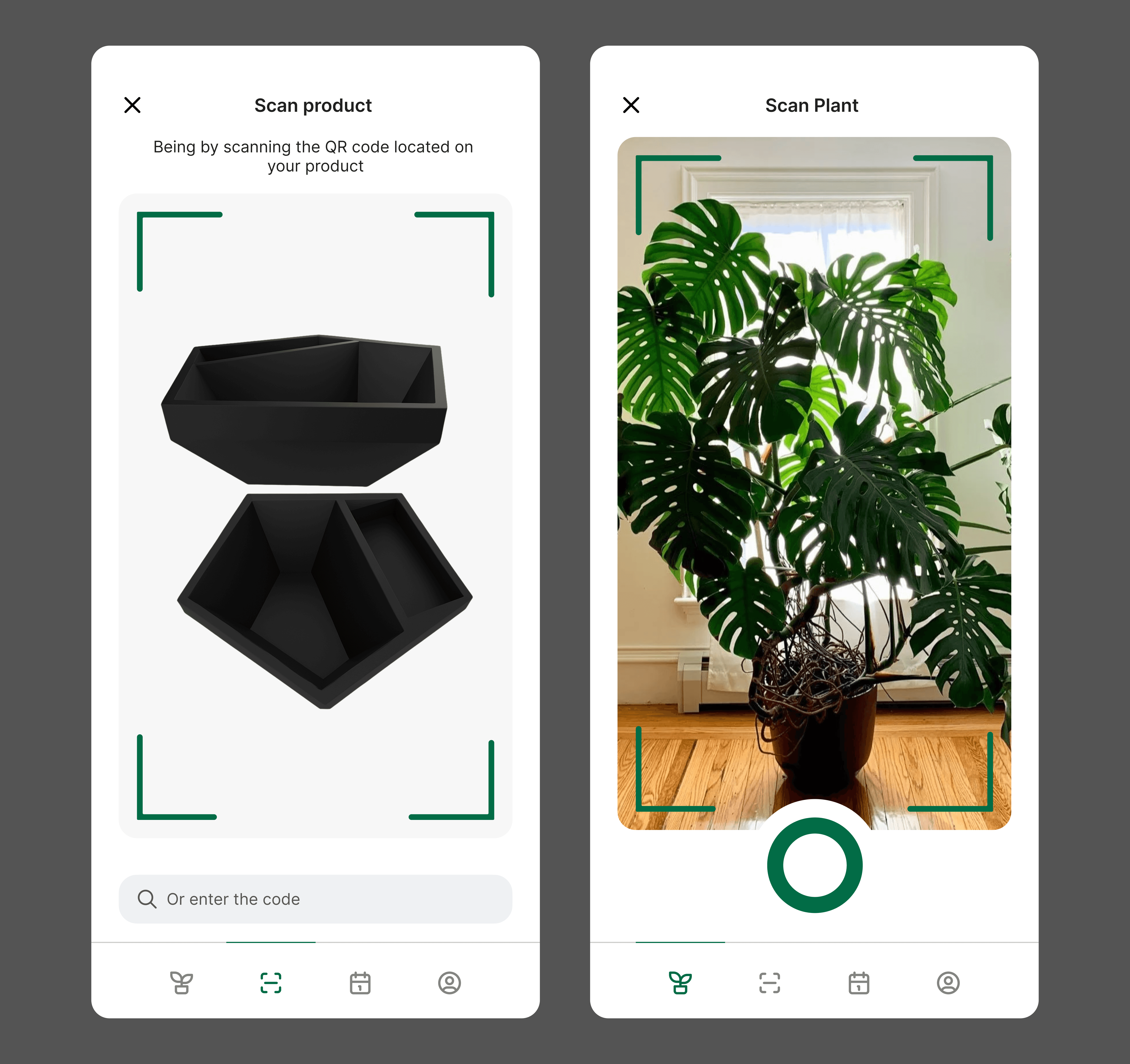
∙ Add IoT pairing flow - No one was able to connect the smart planter.
∙ No explanation of required hardware - Users do not understand that they need a physical device.
∙ Lack of real automation, add automatic task flow rather than alerts.
CHANGE
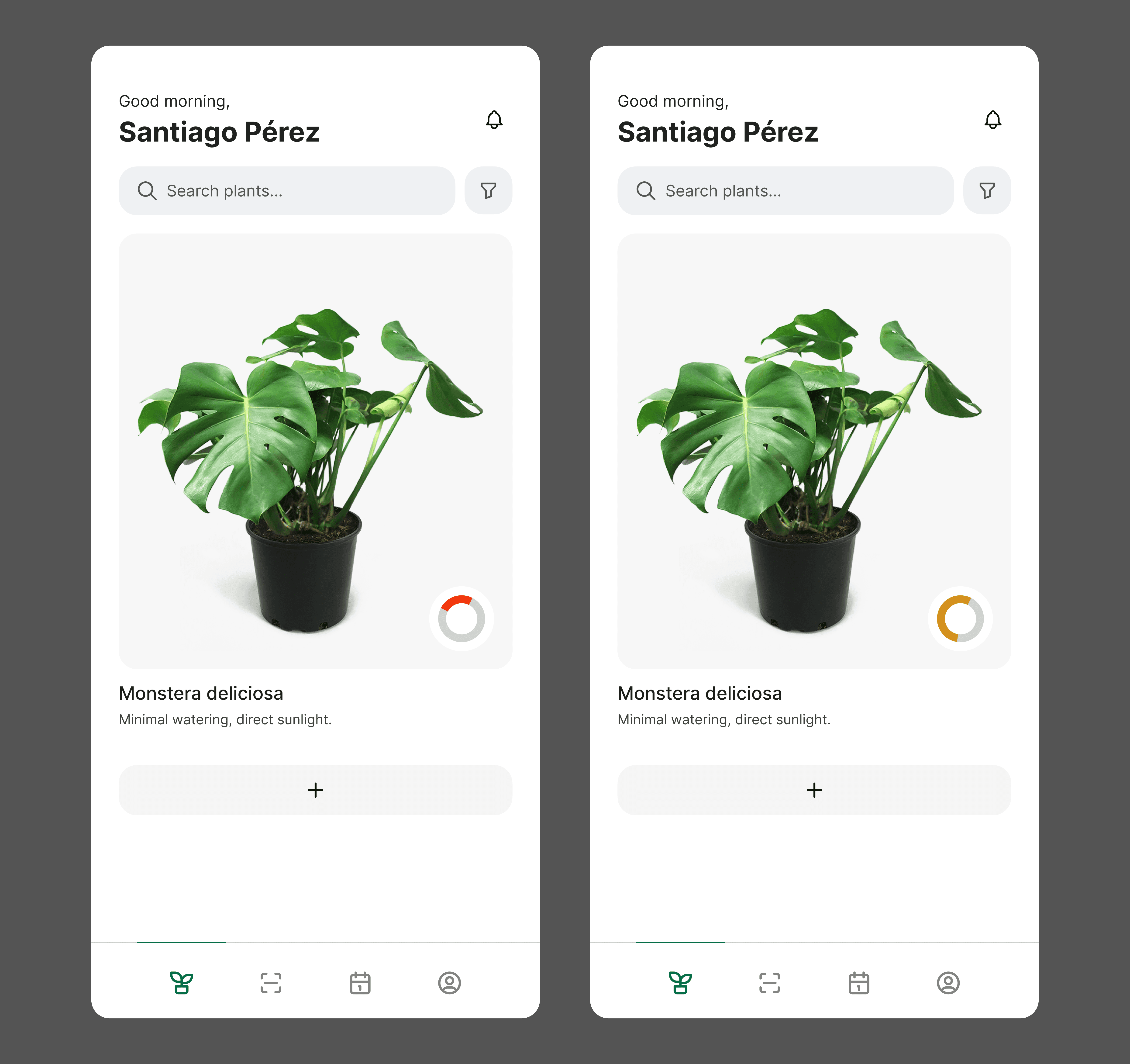
∙ Color-coded health indicators (green/yellow/red)
∙ Historical sensor data graphs
∙ Integration with Alexa/Google Home/Siri
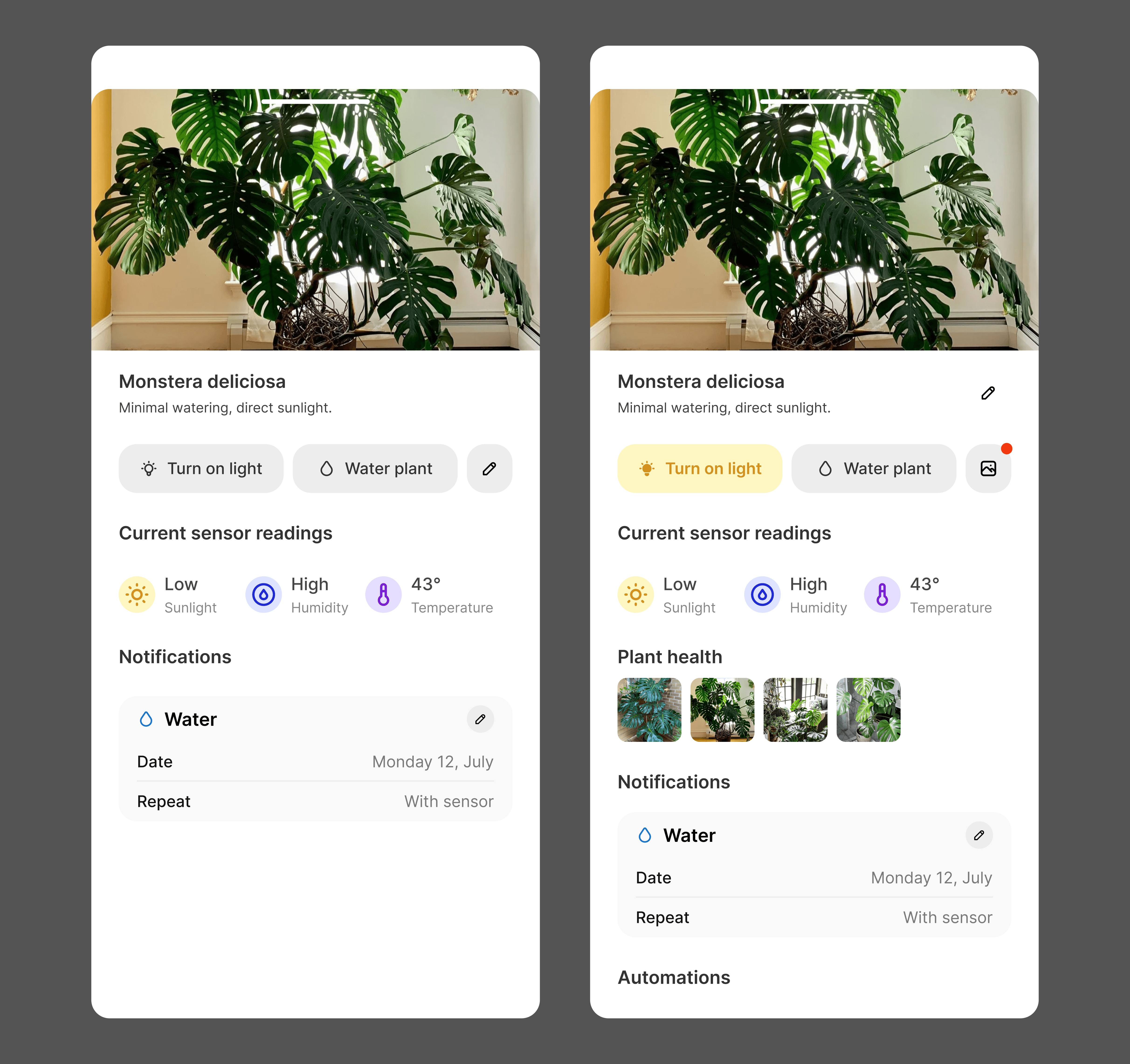
Iteration 2
Changes
Thank you for watching