Nest

Foolproof Challenge 2025
PROCESS HIGHLIGHTS

Project overview

Goal

Design a banking app that helps users save money with emotional purpose, turning abstract financial goals into personal and motivating experiences.

Opportunity

Create a unique financial platform that humanizes money management by connecting emotions, motivations, and AI-powered guidance.

Timeline

September 2025

Disciplines

User Experience Design

User Interface Design

Responsibilities

UX Research

Prototyping

Tools

Figma

Figjam

BACKGROUND

Saving money can often feel cold and disconnected.

Traditional banking apps focus only on numbers and transactions, leaving users without emotional motivation to continue saving.


People don’t just save for “$1000” — they save for what that money represents: experiences, relationships, security, or self-improvement.However, existing financial tools rarely reflect that emotional side, making it harder for users to stay engaged and consistent.


Nest was designed to change that — to make saving feel personal, rewarding, and human.

The Process

1

Research

User Interviews

Competitor Analysis

2

Synthesis

Persona

User Journey

3

Ideation

User Flow

4

Final Designs

Final Prototype

5

Reflection

Conclusion

RESEARCH

User Interviews

To better understand people’s emotional relationship with money and saving habits, I conducted user interviews with individuals between 20–35 years old, including students, professionals, and young families.

Questions revolved around:

When you think about saving money, what emotions come to mind?

What motivates you to start (or stop) saving?

How do you currently track or celebrate your financial goals?

What kind of support or reminders would help you save more consistently?

RESEARCH

Competitor Analysis

The analysis focused on understanding how existing financial and savings platforms — such as Revolut, Monzo, and Qapital — address goal-setting and emotional engagement.


The goal was to evaluate how effectively these tools support emotional connection, automation, and behavioral nudges that encourage consistent saving.


Revolut

A global digital banking app offering multi-currency accounts, budgeting tools, and investment options. It allows users to manage spending, save through “Vaults,” and automate small savings from transactions.

Pros

∙ Strong financial ecosystem: supports banking, crypto, and investments in one place.

∙ Round-up savings feature makes micro-saving automatic and effortless.

∙ Modern, intuitive interface with clear data visualization.

Cons

∙ The experience feels utility-driven, not emotionally engaging.

∙ Savings “Vaults” lack personal motivation or storytelling — goals feel numeric, not meaningful.

∙ Overloaded with financial features, which can make saving feel secondary or complex.

Monzo

A UK-based neobank focused on transparency and simplicity. It allows users to create “Pots” for different saving goals, track spending in real time, and receive insights on their habits.

Pros

Simple goal-based saving system with customizable “Pots.”

∙ Strong community and transparency ethos, building user trust.

∙ Instant notifications and insights improve awareness and control.

Cons

∙ Although friendly, its emotional connection is surface-level — it doesn’t go beyond financial tracking.

∙ Limited personalization in how goals are represented or celebrated.

∙ Focused mainly on UK market, limiting accessibility for global audiences.

Qapital

US-based savings app that combines behavioral economics and goal-based saving. It automates transfers using customizable “rules” (e.g., rounding up purchases or saving when specific events occur).

Pros

∙ Strong behavioral design foundation — uses nudges effectively.

∙ Flexible automation rules encourage creativity in saving habits.

∙ Focus on goal visualization helps users stay motivated.

Cons

∙ The emotional layer focuses on motivation through automation, not personal storytelling.

∙ The interface can feel dated compared to newer fintechs.

∙ Some features are locked behind premium plans, limiting accessibility.

Revolut

A global digital banking app offering multi-currency accounts, budgeting tools, and investment options. It allows users to manage spending, save through “Vaults,” and automate small savings from transactions.

Pros

∙ Strong financial ecosystem: supports banking, crypto, and investments in one place.

∙ Round-up savings feature makes micro-saving automatic and effortless.

∙ Modern, intuitive interface with clear data visualization.

Cons

∙ The experience feels utility-driven, not emotionally engaging.

∙ Savings “Vaults” lack personal motivation or storytelling — goals feel numeric, not meaningful.

∙ Overloaded with financial features, which can make saving feel secondary or complex.

Monzo

A UK-based neobank focused on transparency and simplicity. It allows users to create “Pots” for different saving goals, track spending in real time, and receive insights on their habits.

Pros

∙ Advanced visual recognition technology with high ∙ accuracy rates
∙ Integrated care reminders and scheduling features
∙ Access to plant experts for personalized advice
∙ Disease diagnosis capabilities through photo analysis

Cons

∙ Although friendly, its emotional connection is surface-level — it doesn’t go beyond financial tracking.

∙ Limited personalization in how goals are represented or celebrated.

∙ Focused mainly on UK market, limiting accessibility for global audiences.

Qapital

US-based savings app that combines behavioral economics and goal-based saving. It automates transfers using customizable “rules” (e.g., rounding up purchases or saving when specific events occur).

Pros

∙ Strong behavioral design foundation — uses nudges effectively.

∙ Flexible automation rules encourage creativity in saving habits.

∙ Focus on goal visualization helps users stay motivated.

Cons

∙ The emotional layer focuses on motivation through automation, not personal storytelling.

∙ The interface can feel dated compared to newer fintechs.

∙ Some features are locked behind premium plans, limiting accessibility.

RESEARCH

Insights

1

Users see saving as self-care — they want it to feel empowering, not restrictive.

2

People are more consistent when goals are emotionally meaningful (“Trip with my mom”) rather than generic (“Save $1000”).

3

Visual feedback and positive reinforcement help sustain motivation.

4

Users feel more trust when the app reflects their story and celebrates progress, not just transactions.

User Pain Points:

Saving feels impersonal and stressful.

Lack of emotional connection or positive reinforcement.

Goals often feel too big or abstract, leading to loss of motivation.

No personalized guidance or celebration of small wins.

IDEATION

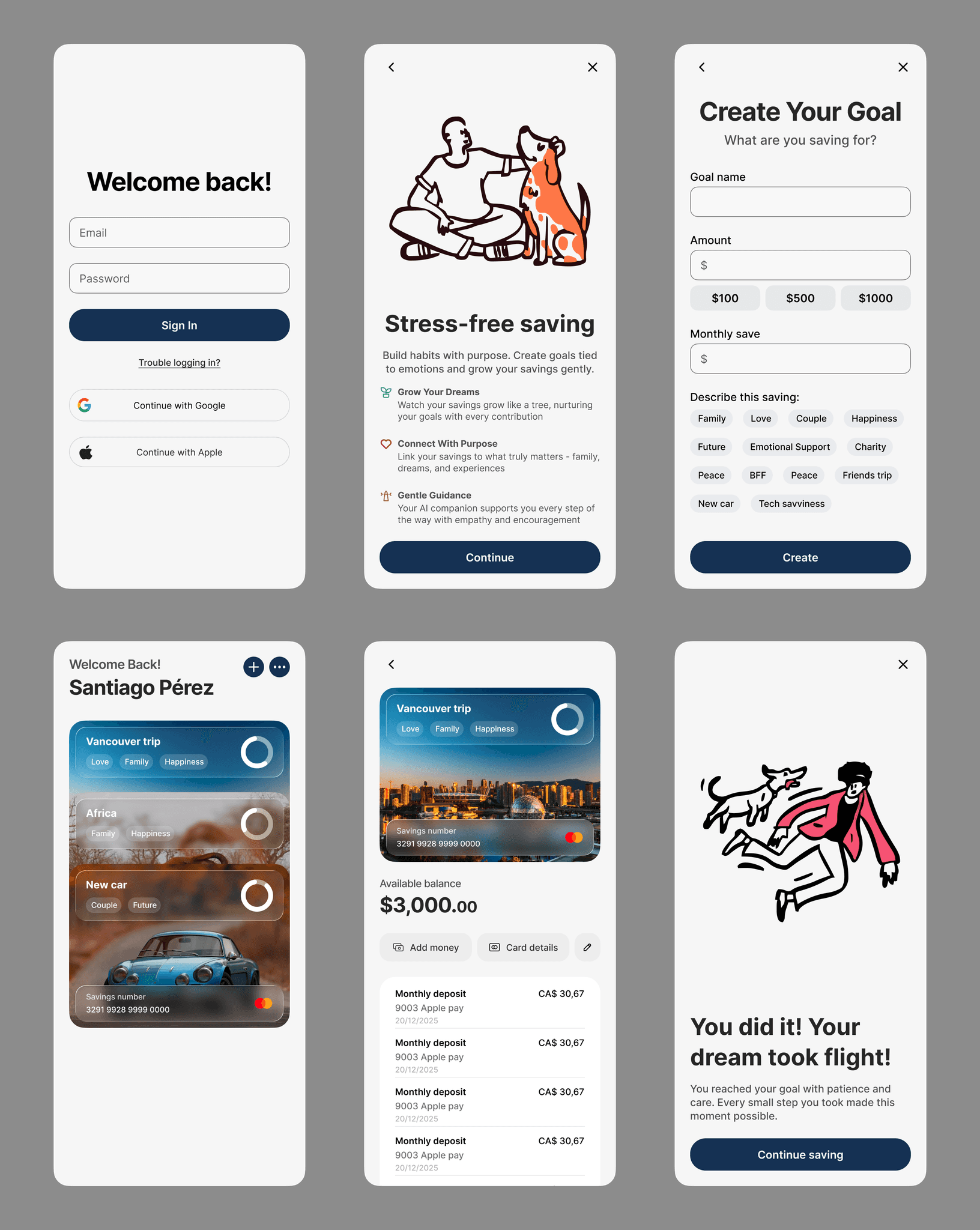
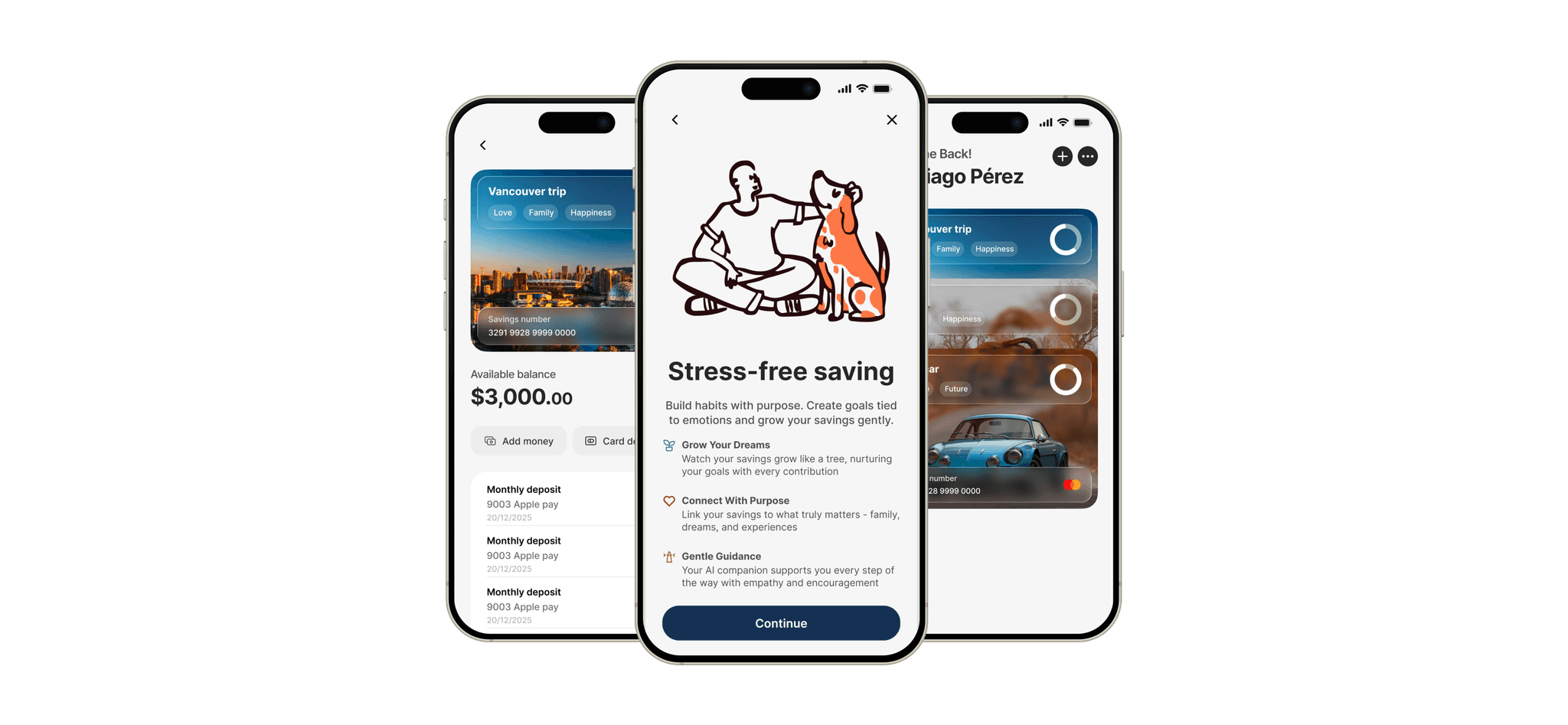
Final Design

Nest

Nest

Thank you for watching

Create a free website with Framer, the website builder loved by startups, designers and agencies.